DevOps and CI/CD for Small Teams: Faster, Safer Releases
How small product teams can add CI/CD, previews, monitoring, and rollbacks—without enterprise complexity or a full platform team—so releases stop depending on one person’s laptop.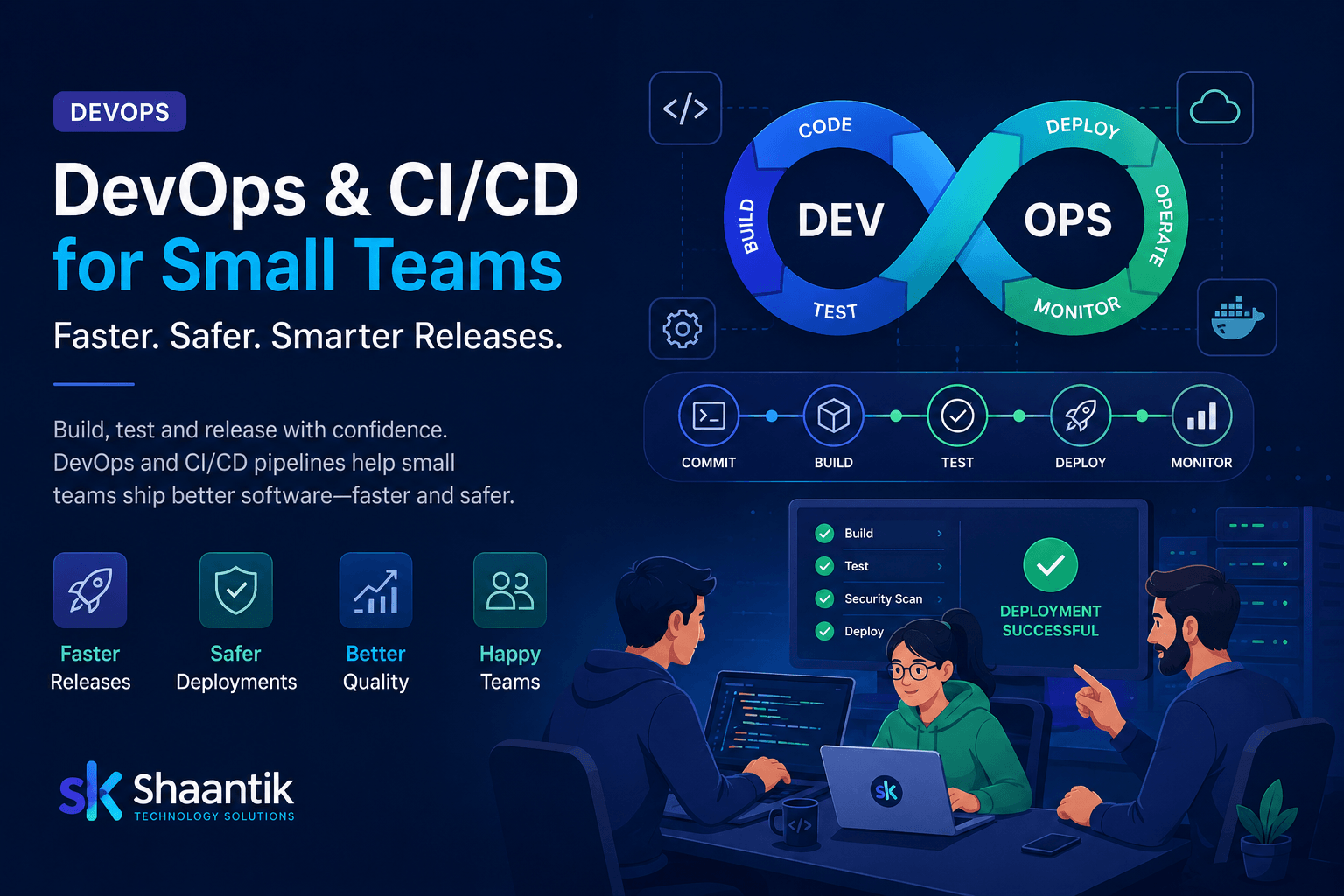
Introduction
Small teams don’t need a giant platform org—they need reliable releases. Manual deploys, “works on my machine,” and weekend fire drills are what DevOps should remove first.
Good DevOps for startups is boring on purpose: tests run automatically, production deploys are repeatable, and rollbacks are documented.
This guide covers a lean CI/CD setup that scales with you. For implementation help, see Shaantik DevOps & cloud or contact us.
1. What “Good Enough” DevOps Looks Like
For most startups and agencies, the baseline is simple:
- Every push runs tests and a build in CI.
- Main branch deploys to production through a pipeline—not a laptop.
- Preview environments for pull requests when possible.
- Basic monitoring and alerts for downtime and errors.
- A documented rollback path.
2. Build a CI/CD Pipeline Without Overengineering
- Connect GitHub/GitLab to a CI runner.
- Run lint, typecheck, and tests on every PR.
- Build artifacts once; promote the same build to staging/production.
- Protect main with required checks before merge.
- Keep secrets in the host/CI vault—not in the repo.
Start on the hosting you already use (Vercel, AWS, VPS, containers). Consistency beats exotic architecture.
3. Preview Environments Catch Issues Early
PR previews let designers and PMs click the real change before merge. That alone prevents many “it looked fine locally” incidents.
- Generate a unique URL per pull request.
- Seed preview data carefully (never production secrets).
- Tear down previews automatically after merge/close.
4. Monitoring and Rollbacks
- Uptime checks + error tracking beat guessing from user complaints.
- Alert the right channel (Slack/email) with owner and severity.
- Keep the previous release artifact ready so rollback is a switch, not a rewrite.
- Write a one-page runbook: who deploys, who is on-call, how to revert.
Docker helps when environments drift; it’s not mandatory for every frontend. Use containers where they reduce pain, not as a fashion choice.
5. A 30-Day Adoption Plan
- Week 1: CI on every PR (tests + build).
- Week 2: Automated staging deploy from main.
- Week 3: Production deploy with approval + rollback notes.
- Week 4: Monitoring, alerts, and a short runbook.
If releases still depend on one person, Shaantik can automate the path with DevOps & cloud so shipping is safer as the team grows.
Conclusion
DevOps for small teams is about reducing risk and founder bottlenecks—not collecting tools. Automate build, deploy, observe, and recover. Everything else can wait.
Ship smaller, ship safer, and stop treating production deploys like a special event.
Frequently Asked Questions
Is DevOps only for large companies?
No. Early teams often benefit most because each release is high-stakes and knowledge is concentrated in a few people.
Do we need Kubernetes?
Usually not at the start. Many products run well on simpler hosting with solid CI/CD and monitoring.
How fast can a basic pipeline ship?
A focused CI/CD baseline often lands in 1–3 weeks depending on your stack and environments.
Will this slow developers down?
A good pipeline adds a few minutes of checks and saves hours of broken releases and manual deploy stress.
Related service: AI Automation — Shaantik builds AI chatbots, workflow automation, knowledge-base search, CRM integrations, and reporting systems that reduce manual work with clear guardrails.