Why Most Google Ads Campaigns Fail in the First 90 Days (And How to Fix Them)
Most Google Ads accounts waste budget in the first 90 days because of mixed intent, weak landing pages, and messy conversion tracking. Learn the real failure patterns and a practical fix plan.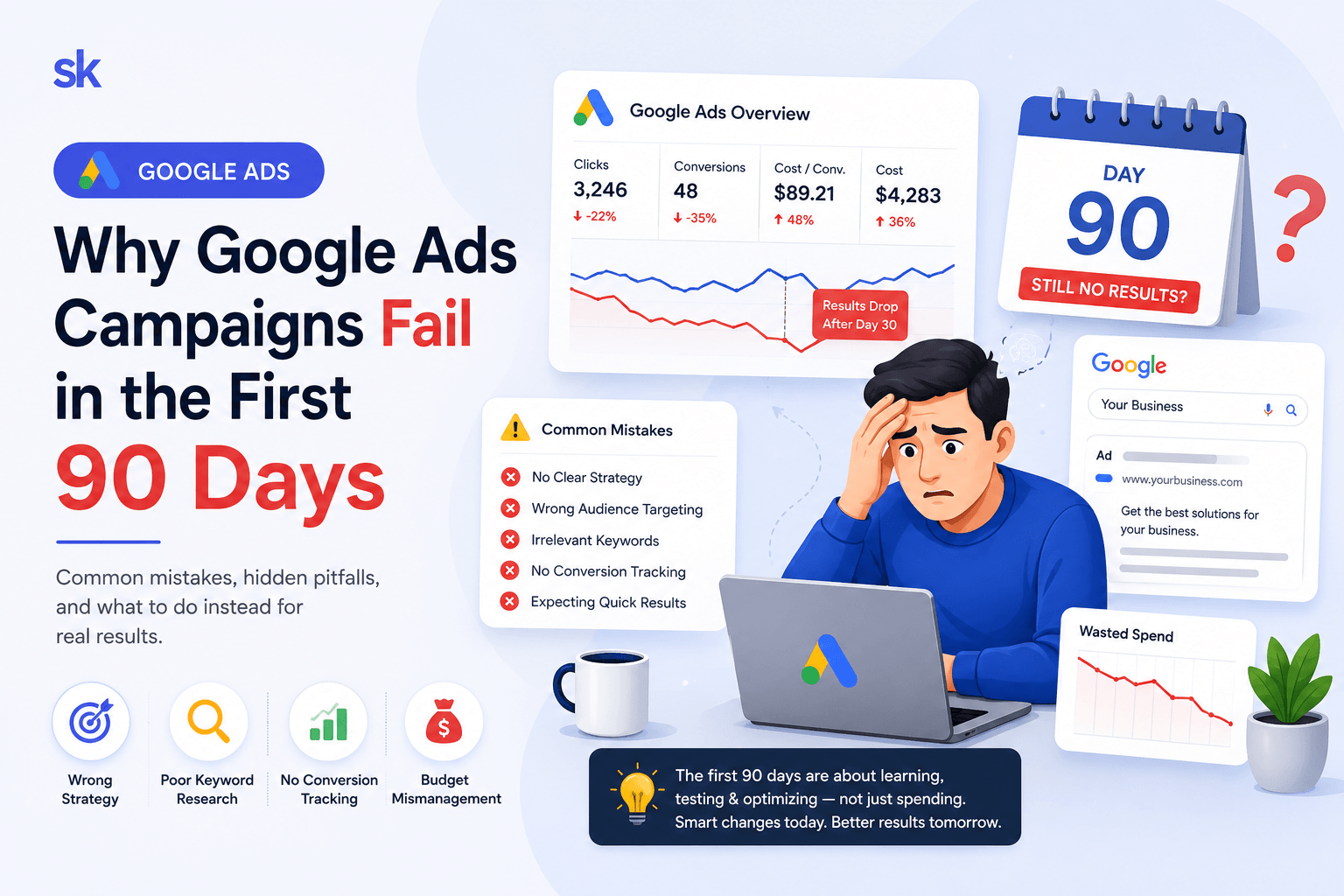
Introduction
Google Ads can generate high-intent leads quickly—but only when the account structure, offer, and landing page work together. In the first 90 days, many businesses turn ads on, watch spend rise, and assume the channel “doesn’t work.”
In reality, most early failures come from avoidable setup mistakes: mixed search intent, weak conversion tracking, broad match chaos, and landing pages that do not match the ad promise.
This guide explains why campaigns fail early and how to fix each issue with a practical process you can apply this month. For managed campaigns and funnel work, see our digital marketing service or contact Shaantik.
1. Mixing High-Intent and Research Keywords
When “buy,” “pricing,” and “what is” keywords sit in the same campaign, Google spends on cheaper research traffic while high-intent clicks compete for leftover budget.
How to Fix It
- Split campaigns by intent: research vs commercial vs brand.
- Give high-intent keywords their own budget and bids.
- Match each ad group to one clear landing page promise.
- Review search terms weekly and add negatives aggressively.
2. Weak or Mismatched Landing Pages
A strong ad only earns the click. If the landing page is slow, vague, or talks about something else, paid traffic will bounce.
How to Fix It
- Mirror the ad headline and offer on the page hero.
- Keep one primary CTA above the fold.
- Add trust signals near the form: reviews, logos, process steps.
- Improve mobile load speed before increasing spend.
3. Broken or Incomplete Conversion Tracking
If Google cannot see real leads, Smart Bidding optimizes for the wrong actions—or no actions at all. Form spam, thank-you page views, and phone calls are often tracked incorrectly.
How to Fix It
- Track only qualified conversions (submitted lead, booked call, purchase).
- Use Google Tag Manager and verify in Tag Assistant.
- Import offline conversions when sales close later.
- Exclude junk form submissions from optimization.
4. Scaling Budget Before Signal Quality Exists
Doubling budget in week two often increases CPC and expands into lower-quality searches. Early campaigns need clean data before aggressive scale.
Best Practices for the First 90 Days
- Weeks 1–2: tighten targeting, fix tracking, collect clean search terms.
- Weeks 3–6: improve ads and landing pages with controlled tests.
- Weeks 7–12: raise budget only on proven ad groups.
5. Ignoring Offer Clarity and Sales Follow-Up
Ads cannot fix a weak offer or slow response time. If leads wait hours for a reply, conversion rate collapses even when traffic quality is good.
How to Fix It
- Make the offer specific: free audit, fixed-scope quote, demo.
- Respond to leads within minutes whenever possible.
- Use CRM stages so marketing and sales share one definition of “qualified.”
- Review lead quality weekly with sales notes, not vanity metrics.
Conclusion
Google Ads rarely fails because “ads don’t work.” It fails when intent, tracking, landing pages, and sales follow-up are misaligned in the first 90 days.
Fix structure first, then creative, then budget. That order protects spend and builds a channel you can scale with confidence. Get help from Shaantik with paid growth and funnels.
Frequently Asked Questions
How long should I wait before judging Google Ads?
Give the account at least 4–6 weeks of clean tracking and search-term cleanup before making big channel decisions.
What is the most common early Google Ads mistake?
Mixing keyword intent in one campaign and sending all traffic to a generic homepage.
Should I use Smart Bidding from day one?
Only after you have reliable conversion data. Until then, use simpler bidding and focus on signal quality.
Do landing pages matter more than ads?
Both matter, but landing pages usually decide whether paid clicks become leads.
Related service: Digital Marketing — Shaantik digital marketing for Google Ads, Meta Ads, funnels, email automation, CRO, and analytics — campaigns built around qualified leads and clear ROI.